
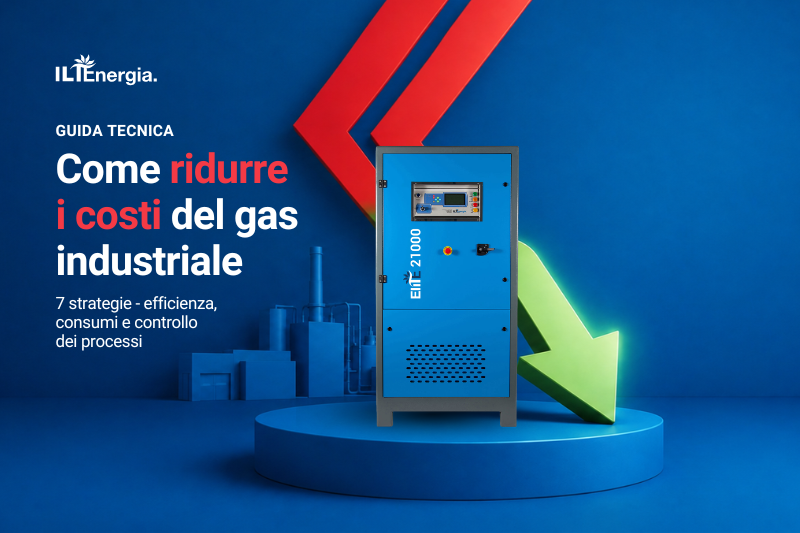
How to Reduce Industrial Gas Costs is a question many manufacturers are asking as they look for ways to improve efficiency and remain competitive. While gas prices play an important role, overall costs are also influenced by consumption patterns, equipment maintenance, gas losses, and supply management. The most effective results often come from a broader approach that combines consumption monitoring, process optimization, and the adoption of innovative technologies.
Reducing industrial gas costs means analyzing the entire gas usage cycle, identifying inefficiencies, and uncovering opportunities for improvement that can deliver measurable long-term benefits.
1. Monitor Gas Consumption to Identify Waste and Inefficiencies
The first step in reducing industrial gas costs is gaining an accurate understanding of actual gas consumption.
Many companies track the cost of gas supplies but lack detailed data on the consumption of individual departments, machines, or production processes. This lack of visibility makes it difficult to identify waste and optimize resource utilization.
An effective monitoring system makes it possible to:
- Identify abnormal consumption patterns
- Detect hidden waste
- Highlight inefficient processes
- Plan targeted corrective actions
- Optimize purchasing decisions
Measuring consumption provides the information needed to make more informed decisions and implement effective cost-saving strategies.
2. Reduce Gas Losses Through Regular Maintenance
Gas leaks are one of the main causes of rising operating costs associated with industrial gases.
Worn seals, faulty fittings, and improperly sealed pipelines can lead to continuous gas losses that often go unnoticed for extended periods.
Implementing a preventive maintenance program helps companies to:
- Reduce unnecessary gas consumption
- Improve plant safety
- Increase equipment reliability
- Minimize downtime-related costs
Even minor leaks, if left unresolved, can have a significant impact on a company’s annual operating expenses.
3. Optimize Gas Flow Rates in Production Processes
In many manufacturing environments, gas flow parameters are set with large safety margins. While this approach may seem prudent, it often results in gas consumption levels that exceed actual process requirements.
A technical review of operating parameters can help to:
- Reduce gas volumes used
- Improve process control
- Maintain product quality standards
- Lower costs without significant investment
Optimizing gas flow rates is often one of the fastest ways to achieve measurable cost savings.
4. Train Personnel to Improve Operational Efficiency
Incorrect operating procedures, excessive gas usage, or improper handling practices can generate waste that accumulates over time and significantly increases operating costs.
Investing in employee training helps companies to:
- Reduce operational errors
- Minimize waste
- Improve plant management
- Promote a culture of efficiency and resource awareness
Employee engagement and awareness are often key factors in achieving long-term reductions in gas consumption.
5. Analyze the Total Cost of Gas Supply
When looking for cost-saving opportunities, many companies focus solely on the purchase price of gas. However, the total cost of supply includes several additional expenses that are often overlooked.
These may include:
- Transportation
- Cylinder rental
- Administrative management
- Internal handling
- Storage
- Replacement of empty cylinders
Evaluating the overall cost of the supply system provides a more accurate picture of actual spending and helps identify further opportunities for optimization.
6. Evaluate On-Site Gas Generation Systems
One of the most innovative ways to reduce industrial gas costs is to generate gas directly at the production site.
Hydrogen and oxygen generators produce gas exactly when it is needed, eliminating many of the inefficiencies associated with traditional supply methods.
The main benefits include:
- Elimination of transportation costs
- Reduced logistics activities
- Continuous gas availability
- Greater operational autonomy
- Improved production continuity
For companies with high and continuous gas consumption, on-site generation can be an effective solution for improving process control and reducing overall operating costs.
7. Evaluate the Return on Investment of New Technologies
Any efficiency-focused initiative should be assessed based on its overall economic benefits over time.
In the case of industrial gas generation technologies, savings may result from several factors:
- Lower gas costs
- Elimination of cylinder rental fees
- Reduced logistics expenses
- Less production downtime
- Improved operational efficiency
- Lower safety management costs
- Potential reductions in insurance costs
For companies with substantial and continuous gas demand, the return on investment can be particularly attractive.
Which Industries Can Benefit the Most?
Industrial gas optimization strategies are especially valuable for companies operating in sectors such as:
- Welding and cutting
- Metalworking and manufacturing
- Electronics production
- Heat treatment processes
- Jewelry manufacturing and specialized workshops
- Operations requiring continuous use of hydrogen and oxygen
Businesses with high consumption rates or processes that depend heavily on uninterrupted gas availability often achieve the greatest benefits in terms of operational efficiency, production continuity, and cost reduction.
Conclusion
Understanding how to reduce industrial gas costs requires a strategy that goes beyond simply negotiating supply prices. Companies that focus on monitoring, maintenance, process optimization, employee training, and technological innovation can achieve significant long-term savings.